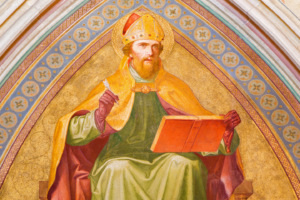

Excavating Corinth: Christianity and the History of Sexual Dysfunction
As I prepare to go to Greece for the first time since I was 19, I’ve been excavating some of the hidden sexual histories of Greece in preparation for launching my Excavate Greece series while I’m there.
That excavation led me somewhere I wasn’t expecting: Corinth.
For centuries, Corinth has carried an extraordinary sexual reputation. It has been described as a city of sexual excess, prostitution, and moral decadence—a reputation so enduring that “Corinthian” itself eventually became associated with sexual licentiousness.
But how much of that reputation actually belonged to Corinth?
And how much was constructed by the people who interpreted it?
That question became much more interesting when I came across the work of scholar Matthijs den Dulk, particularly his examination of what he calls the tradition of the “Licentious Corinthians.”
His scholarship challenges the assumption that ancient Corinth was uniquely sexually depraved. Instead, he examines how that reputation was constructed, interpreted, and amplified across time.
This matters because one of the most influential interpreters of Corinth was the apostle Paul.
Paul, Corinth, and the Interpretation of Sexuality
Paul lived and preached in Corinth during the first century CE. He wrote letters to the Christian community there that would eventually become part of the New Testament.
I was particularly struck by the possibility that Paul came to Corinth with pre-existing ideas about Corinth’s sexual reputation and sexuality. Those ideas and judgments may have influenced what he noticed and emphasized.
Corinth itself was a functioning society in which Aphrodite, desire, sexuality, fertility, pleasure, and ritual had legitimate cultural and religious meaning.
Aphrodite was not standing on the Acrocorinth waiting for someone to arrive and reveal that she was a false god. Rather, she belonged to an existing religious and cultural world with its own systems of meaning.
Paul entered that world carrying a very different theological and moral framework.
As a result, his interpretation of sexuality did not simply describe Corinthian culture. It evaluated that culture through another system of belief.
Those interpretations would eventually matter enormously because Paul’s writings became foundational texts for Christian teachings about sexuality.
Over centuries, those teachings moved far beyond theology. They helped shape Western ideas about the body, desire, sexual restraint, marriage, pleasure, and what kinds of sexual expression were considered legitimate.
Eventually, those cultural ideas also entered medicine.
When Sexual Morality Becomes Medicine
Medicine does not develop outside culture.
For centuries, Western medicine developed inside societies deeply influenced by Christian moral frameworks. Therefore, physicians, scientists, psychiatrists, and early sexologists inherited cultural assumptions about what sexuality was supposed to look like.
Over time, some of those assumptions could become embedded within scientific and medical categories.
Consider masturbation.
For long periods of Western history, masturbation was not simply regarded as a sexual behavior. It was described as morally dangerous and eventually medicalized as physically and psychologically harmful.
Women’s sexual desire offers another example.
Women who expressed too much desire could be regarded as pathological. Yet women who expressed too little desire could eventually also be regarded as dysfunctional.
The boundary between sin, deviance, disorder, and disease has not always been as clear as we might like to imagine.
That history matters when we examine how sexual function and sexual dysfunction came to be defined.
What begins as a theological or cultural judgment can, over generations, become so deeply embedded that it begins to look like an objective description of human sexuality.
In other words:
Scripture becomes theology. Theology shapes morality. Morality influences culture, and culture can eventually shape medicine.
Along the way, we may forget where the original assumptions came from.
What If We Excavated Sexual Dysfunction Too?
This is where Corinth unexpectedly intersects with my own work.
My research increasingly conceptualizes the therapeutic target in orgasm difficulty not simply as increasing stimulation or teaching a particular sexual technique. Instead, I am interested in facilitating a shift out of conscious monitoring and control and into an altered or absorbed orgasm-supportive state.
Across very different orgasmic learning pathways—including cannabis, hypnosis, fantasy and imagery, mindfulness, breath and tantric practices, pelvic-floor and somatic approaches, and even historical psychedelic-assisted psychotherapy—a similar phenomenon appears repeatedly:
The person moves away from ordinary evaluative consciousness and into a state characterized by absorption, sensory amplification, reduced self-monitoring, and greater capacity to allow the orgasmic response to unfold.
That raises a question I find increasingly difficult to ignore.
What happens when a culture teaches people — and particularly women — to monitor sexuality?
For example, people may learn to evaluate and control desire while remaining vigilant about whether it is acceptable. They may also become highly conscious of how sexual behavior looks, what it means, whether it is appropriate, and whether they are doing it correctly.
Those cultural instructions do not necessarily disappear when someone enters a bedroom.
They may enter the nervous system with us.
Could Sexual Self-Monitoring Affect Orgasm?
If orgasm involves, at least partly, the capacity to relinquish conscious monitoring and enter an absorbed state, then the history of sexual morality may be relevant to the history of sexual dysfunction in ways we have barely begun to investigate.
This does not mean Christianity “caused” female orgasmic difficulty.
Human sexuality is far too biologically, psychologically, relationally, and culturally complex for such a claim.
However, it does mean that the categories through which we understand sexual function deserve historical excavation.
The relationship between attention and orgasm is already central to the experience of many women who find themselves getting stuck in their heads during sex. Self-monitoring, pressure, distraction, and constant evaluation can pull attention away from erotic sensation and into observation.
Similarly, difficulty reaching orgasm may involve much more than finding the right physical stimulation. Attention, safety, absorption, learning, and the nervous system can all become part of the larger conversation about orgasmic response.
Therefore, before asking only:
What is wrong with the woman who cannot orgasm?
we might also ask:
What conditions make orgasmic response easier or harder to access?
Then comes an even larger question:
How did we decide what normal sexual functioning was supposed to look like in the first place?
Excavating the Cultural History of Sexuality
That is part of what interests me about excavating places like Corinth.
I am not looking for a romanticized ancient sexual paradise. Ancient Greece had its own hierarchies, restrictions, inequalities, and sexual norms.
I am interested in something more fundamental:
How do cultures construct meaning around sexuality—and what happens when one culture’s interpretation becomes authoritative enough to define sexuality for generations that follow?
When I travel through Greece for Excavate Greece, I want to explore these histories physically as well as intellectually.
I’ll be looking at the temples, sanctuaries, myths, archaeological remains, and landscapes where sexuality, fertility, pleasure, divinity, and the body once occupied cultural meanings very different from those that later dominated Western thought.
Corinth may be one of the most interesting places to begin.
Because excavating Corinth is not only about discovering what happened there two thousand years ago.
It is also about excavating the ideas we inherited from the people who told us what Corinth meant.
By examining those interpretations more closely, perhaps we can also begin excavating some of our assumptions about sexuality itself.
What did sexual difficulty look like in societies where desire was more accepted or even sacred?
And might some of what we now call sexual dysfunction reflect a culture that has taught us to remain in control?
These are not questions with simple answers.
But they are questions worth excavating.
Reference
den Dulk, M. Licentious Corinthians: The Construction of a Stereotype in Early Christian Literature.

You may also like